
SMEG vs Philips LatteGo – Which Coffee Machine Should You Buy in Saudi Arabia?
Deciding on SMEG vs Philips LatteGo feels like picking between a vintage Ferrari and a modern Tesla. Both get you where you want to go, but the journey is completely different.
I’ve spent months testing both brands in my kitchen, and here’s the truth: these machines serve completely different audiences. SMEG appeals to those who love the ritual of coffee making and want their kitchen to look like it belongs in a design magazine. Philips LatteGo targets busy families who want café-quality drinks at the push of a button.
The real difference comes down to retro design versus automated milk systems. SMEG brings that Instagram-worthy aesthetic with manual controls that let you craft each cup exactly how you like it. Philips LatteGo focuses on convenience with their patented automatic milk frothing system that takes the guesswork out of making lattes and cappuccinos.

Quick Comparison: SMEG vs. Philips LatteGo
| Feature | SMEG Espresso (ECF Series) | Philips LatteGo (Series 2200/3200) |
| Best For | Design lovers & aspiring home baristas | Busy families & convenience seekers |
| Milk System | Manual Steam Wand (Requires skill) | LatteGo Automatic (One-touch) |
| Coffee Type | Ground coffee or ESE pods | Fresh beans (Built-in grinder) |
| Warm-up Time | ~40 Seconds | < 60 Seconds (QuickStart) |
| Cleaning | Manual purge & wipe after every use | Dishwasher safe & auto-rinse |
| Price (Entry) | 2,000 – 2,500 SAR | 1,200 – 1,500 SAR |
| Price (Mid-Range) | 3,500 – 4,500 SAR (BCC Models) | 2,000 – 3,000 SAR |
1. Design & Build
SMEG Aesthetics
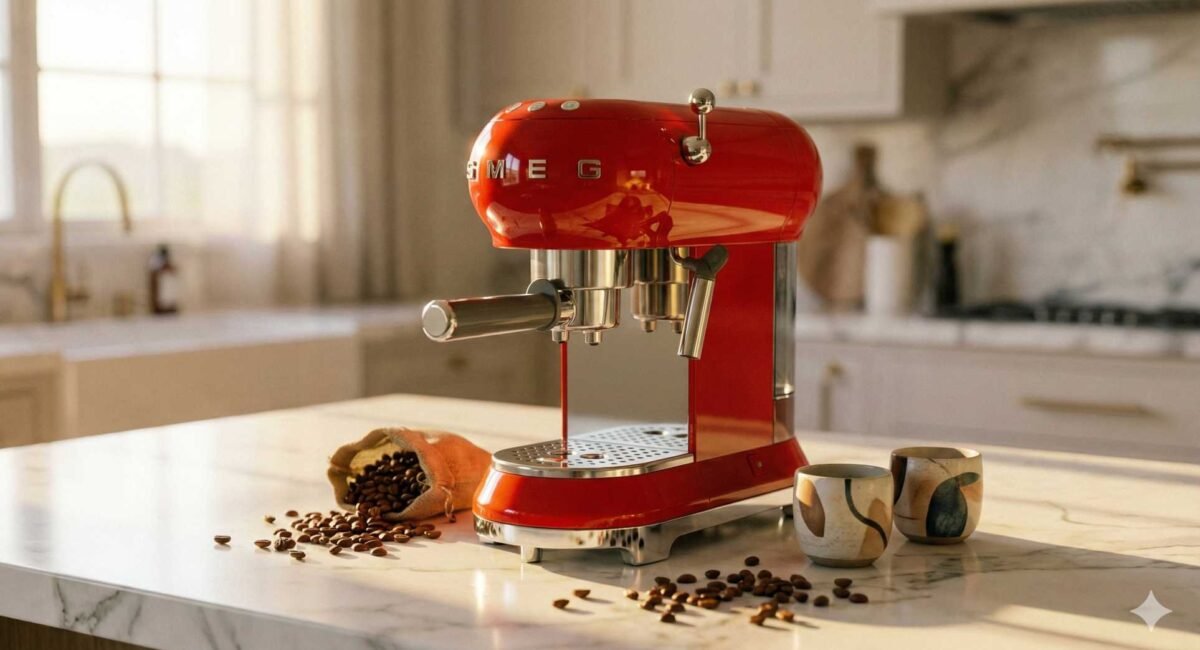
Walking into a kitchen with a SMEG coffee machine feels like stepping into a 1950s Italian café. These machines are conversation starters. The rounded edges, chrome details, and that signature retro bulge make them look more like art pieces than appliances.
SMEG offers their coffee machines in multiple colors – from classic cream and black to bold red and pastel blue. The build quality feels substantial. When you touch the controls, there’s a satisfying click that tells you this machine was built to last decades, not just years.
The downside? SMEG machines take up considerable counter space. In my 80-square-meter apartment in Riyadh, the SMEG dominated my kitchen counter. If you’re working with limited space, this becomes a real consideration.
Philips Modern Minimalism
Philips takes the opposite approach. Their LatteGo machines blend into modern kitchens without demanding attention. The design is clean, functional, and understated. Most models come in black or silver with smooth surfaces and minimal buttons.
What impressed me most about Philips is how compact these machines are. Even their full-featured models fit comfortably in smaller kitchens. The build quality feels solid, though not quite as premium as SMEG’s metal construction.
The LatteGo milk container sits seamlessly on top of the machine. It looks like it was always meant to be there, unlike some competitors where the milk system feels like an afterthought.

2. Milk Frothing System
SMEG Manual Steam Wand or Frother
SMEG gives you options. Their espresso machines come with traditional steam wands, while some models include separate milk frothers. Using a steam wand requires practice. My first few attempts at home resulted in either cold milk or something that resembled soap bubbles more than microfoam.
But once you get the hang of it, there’s something deeply satisfying about creating perfect microfoam manually. You control the texture, temperature, and density. Want extra hot milk for your morning latte? No problem. Prefer cooler milk for an afternoon drink? You’re in control.
The separate milk frothers work well for those who want SMEG aesthetics without the learning curve. They heat and froth milk automatically, though you still need to time everything manually.
Philips LatteGo Automatic Milk System
This is where Philips shines. The LatteGo system consists of just two parts – a milk container and a frothing chamber. No tubes, no complex mechanisms to clean.
Pour milk into the container, select your drink, and watch it work. The system creates consistent microfoam every time. I’ve made hundreds of cappuccinos with my test unit, and the milk texture remained remarkably consistent.
The milk stays fresh in the refrigerator between uses. When you want a latte, just click the container back onto the machine. It takes less than 10 seconds to set up.

3. One-Touch Convenience
Philips is Best
Philips LatteGo machines excel at convenience. Most models offer 8-12 drink options accessible through a simple interface. Want a strong cappuccino? Press one button. Prefer a mild latte? There’s a button for that too.
The machines remember your preferences. After a week of use, my test machine learned that I prefer slightly stronger espresso and less milk foam. This level of automation makes busy mornings much easier.
You can even customize drink sizes and strength levels through the interface. It’s like having a barista who knows exactly how you like your coffee, available 24/7.
SMEG Caters to Skill-Based Brewing
SMEG machines require more involvement, but many coffee enthusiasts prefer this approach. You grind your beans, dose the portafilter, tamp with the right pressure, and time your extraction.
This hands-on process means every cup can be different. Some days you’ll pull perfect shots that rival expensive coffee shops. Other days, you might end up with something less impressive. The inconsistency can be frustrating when you’re rushing to work, but rewarding when you nail the perfect extraction.
For weekend mornings when you have time to experiment, SMEG machines offer a more engaging coffee experience. There’s genuine satisfaction in mastering the manual steam wand and pulling consistently good espresso shots.

4. Coffee Taste Comparison
Flavor Profile
Both machines can produce excellent coffee, but they approach it differently. SMEG machines, particularly their espresso models, create more traditional Italian-style coffee. The espresso tends to be stronger, with more crema and a fuller body.
Philips LatteGo machines produce cleaner, more balanced coffee. The automated systems ensure consistent extraction, which means less variation between cups. This consistency appeals to most home users who want good coffee without the daily guesswork.
In blind taste tests with friends, the results were split. Coffee enthusiasts slightly preferred SMEG’s more robust espresso, while casual drinkers favored Philips’ smoother, more approachable flavor profile.
Bean Recommendations
SMEG machines work best with medium to dark roast beans. The manual control allows you to adjust for different bean characteristics. I found that single-origin beans from local Riyadh roasters like Elixir Bunn Coffee worked beautifully in SMEG machines.
Philips LatteGo machines are more forgiving with bean selection. Light, medium, and dark roasts all produce good results. The automated brewing adjusts extraction time and pressure to work with different beans. Brands like Lavazza and Illy, commonly available in Saudi supermarkets, work excellently.

5. Maintenance & Cleaning
LatteGo Quick-Rinse
Philips designed the LatteGo system with cleaning in mind. The milk container goes in the dishwasher or rinses clean in seconds under running water. No disassembly required.
The machine runs automatic cleaning cycles for the internal brewing system. Most models alert you when descaling is needed, typically every 2-3 months depending on water hardness. The entire process takes about 30 minutes and requires minimal hands-on time.
Daily maintenance involves emptying the drip tray and refilling the water reservoir. The whole routine takes less than two minutes.
SMEG Manual Cleaning
SMEG machines require more attention. Steam wands need purging after each use and weekly deep cleaning with milk cleaning solution. The portafilter and group head benefit from daily rinsing.
Descaling SMEG machines takes more time and attention. You need to monitor the process more closely, especially with manual models that don’t have automatic descaling programs.
The extra maintenance isn’t necessarily bad – it keeps you connected to your machine and helps you understand how it works. But it does require more time and attention than many busy families can realistically maintain.
Read : How to clean Smeg Coffee Machine
6. Price Comparison in Saudi Arabia
Entry-Level
Philips LatteGo entry models start around 1,200-1,500 SAR at retailers like Extra and Jarir Bookstore. These include basic LatteGo functionality with 4-6 drink options.
SMEG entry-level models begin around 2,000-2,500 SAR for their basic espresso machines without built-in grinders. Even at the entry level, you’re paying a premium for SMEG’s design aesthetic.
Mid-Range
Mid-range Philips LatteGo machines (2,000-3,000 SAR) offer more drink customization, larger water reservoirs, and better build quality. These represent the sweet spot for most Saudi families.
SMEG mid-range options (3,500-4,500 SAR) include built-in grinders and more advanced brewing controls. The price difference becomes more significant at this level.
Premium
Top-tier Philips LatteGo models reach 4,000-5,000 SAR with features like app connectivity and premium materials.
Premium SMEG machines can cost 6,000-8,000 SAR or more. At this level, you’re investing in a kitchen centerpiece that happens to make excellent coffee.
7. Which Should You Buy? (Saudi Lifestyles)
Apartment Users
For smaller apartments common in cities like Jeddah and Riyadh, Philips LatteGo makes more sense. The compact footprint and automated cleaning suit the fast-paced urban lifestyle. When counter space is limited, functionality often trumps aesthetics.
The noise levels also matter in apartments with thin walls. Philips machines tend to be quieter, especially during milk frothing. Your neighbors will appreciate this during early morning coffee routines.
Busy Families
Families with children and demanding schedules benefit from Philips LatteGo’s convenience. Parents can quickly make quality coffee drinks without the learning curve or maintenance requirements of SMEG machines.
The ability to prepare multiple drinks quickly makes morning routines smoother. When you’re getting kids ready for school, the last thing you need is a complicated coffee ritual.
Safety is another consideration with young children around. Philips machines have fewer exposed hot surfaces and steam wands compared to traditional SMEG espresso machines.
Café-Style Home Brewers
Coffee enthusiasts who enjoy the brewing process should consider SMEG. If you have time on weekends to perfect your technique and appreciate the ritual of manual coffee making, SMEG offers a more engaging experience.
The superior aesthetics make sense if you entertain frequently or simply want your kitchen to reflect your personality. A beautiful SMEG machine becomes a conversation piece that guests remember.
Consider SMEG if you’re already comfortable with manual brewing methods or want to develop serious barista skills at home.
Conclusion
The choice between SMEG and Philips LatteGo ultimately depends on your priorities. Philips LatteGo wins on convenience, maintenance, and value for money. It’s the practical choice for busy Saudi families who want consistently good coffee without the learning curve.
SMEG appeals to design-conscious buyers who view their coffee machine as kitchen décor and appreciate hands-on brewing. You’ll pay more upfront and invest more time in maintenance, but gain a truly distinctive appliance that makes exceptional coffee when operated skillfully.
For most Saudi households, I recommend starting with Philips LatteGo. The convenience and consistent results make daily coffee enjoyment effortless. You can always upgrade to SMEG later if you develop a passion for manual brewing and want to make your kitchen a design showcase.


Leave a Comment