
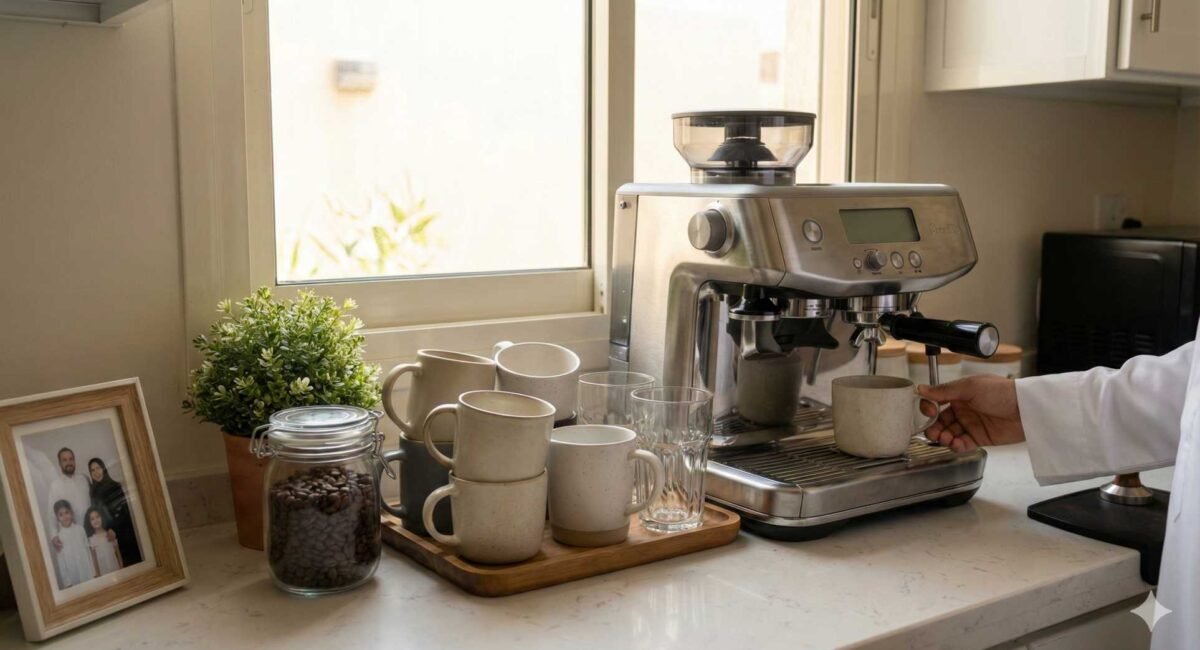
Breville vs Philips LatteGo – Which Should You Buy?
Breville vs Philips LatteGo is one of the most common dilemmas for home coffee buyers today. Choosing between a traditional espresso machine and a modern automatic coffee maker can feel overwhelming, especially when both promise café-quality results. After testing Breville and Philips LatteGo machines for months, one thing became clear: the right choice depends on what you value most in your daily coffee routine.
The core difference in Breville vs Philips LatteGo lies in philosophy. Breville focuses on a classic, hands-on espresso experience with full manual control, while Philips LatteGo is built around convenience and one-touch automation. Both fit perfectly into Saudi homes, but your lifestyle, time, and interest in coffee-making skills will ultimately decide which machine suits you better.

Design & Build
The construction quality between these brands tells two different stories about coffee making philosophy.
Breville machines showcase premium stainless steel construction that feels substantial in your kitchen. The weight alone – often exceeding 15 kilograms – communicates serious engineering. When I first unboxed my Breville Barista Express, the solid metal portafilter and heavy-duty group head immediately impressed me. The brushed steel finish resists fingerprints better than expected, though it does require regular wiping to maintain that showroom appearance.
The control layout follows traditional espresso machine design, with clearly marked buttons and a prominent pressure gauge. Everything feels built to last decades, not years.
Philips LatteGo machines take a completely different approach with their modern plastic construction. While this might sound less premium, the engineering is sophisticated. The lightweight design makes moving and cleaning much easier – something I appreciate when deep cleaning weekly.
The sleek black and silver combination fits seamlessly into contemporary Saudi kitchens. Touch controls replace physical buttons on most models, creating clean lines without mechanical wear points. The compact footprint works particularly well in smaller spaces, taking up roughly 30% less counter space than comparable Breville models.

Milk Frothing System
This represents the biggest practical difference between these machines, and honestly, it’s where most people should make their decision.
Manual Steam Wand
Breville’s traditional steam wand requires technique but offers complete control. Learning to create microfoam takes practice – expect your first dozen attempts to produce inconsistent results. I spent weeks perfecting my technique, watching milk temperature and listening for the right sound as air incorporates.
The reward comes in customization. Want extra thick foam for a cappuccino? You control that. Prefer barely textured milk for a flat white? That’s possible too. Professional baristas prefer manual systems because every cup can be different.
However, the learning curve is real. Steaming milk properly requires attention, timing, and practice. You’ll waste milk during the learning process, and busy mornings don’t always allow for perfect technique.
Automatic LatteGo Milk System
Philips designed their LatteGo system for people who want great milk foam without the learning curve. The two-part milk container connects to the machine, automatically drawing and frothing milk to preset specifications.
Press one button, and within 90 seconds, you have a complete latte. The consistency impresses me – every cup tastes nearly identical, which builds confidence for guests or family members with different skill levels.
The system works particularly well for Saudi families who drink multiple milk-based coffees throughout the day. No technique required means teenagers, elderly relatives, or guests can operate it successfully.
The limitation is customization. While most people find the default foam texture acceptable, you can’t adjust it significantly. The foam works well for lattes and cappuccinos but might not satisfy someone seeking specific textures.

Breville Coffee Machine
Coffee Taste Comparison
Taste comparison requires considering both espresso quality and milk-based drinks separately.
Espresso Richness
Breville machines typically produce superior straight espresso shots. The manual control over grind size, tamping pressure, and extraction time allows optimization for specific beans. When I dial in settings for Saudi-roasted beans, the difference in extraction quality becomes obvious.
The pressure gauge helps monitor extraction, teaching you to recognize proper shot timing. Under-extracted shots taste sour, while over-extracted ones turn bitter. This feedback loop improves your coffee knowledge over time.
Philips LatteGo machines prioritize convenience over espresso perfection. The automatic grinding and tamping produce acceptable shots, but they lack the complexity achievable through manual adjustment. The espresso tastes good, especially in milk drinks, but coffee enthusiasts notice the difference.
Milk-Based Drinks
For milk-based beverages, the gap narrows significantly. Philips LatteGo creates consistently good lattes, cappuccinos, and macchiatos that most people find satisfying. The automatic milk integration ensures proper ratios every time.
Breville machines can produce superior milk drinks when operated skillfully, but the average home user might actually prefer the consistency of automated systems. Perfect microfoam elevates the drinking experience, but imperfect foam ruins it.

Philips Lattego Coffee Machine
Breville vs Philips LatteGo : Maintenance & Cleaning
Daily maintenance requirements differ dramatically between these systems.
LatteGo is Easy
Philips designed the LatteGo system for minimal maintenance. The milk container disassembles into two pieces that rinse clean under running water. No tubes, no complicated parts, no milk residue hiding in unreachable places.
The main machine runs automatic cleaning cycles for the coffee system. Weekly descaling takes about 20 minutes with minimal user involvement. I find this particularly valuable during busy periods when detailed cleaning gets postponed.
The plastic construction resists staining and doesn’t require special cleaning products. Everything except the main unit goes in the dishwasher, making deep cleaning effortless.
Breville is Manual
Breville machines demand more attention but reward careful maintenance with longer life and better performance. The steam wand needs purging after each use and weekly deep cleaning to prevent milk buildup.
The stainless steel components resist staining but show water spots and fingerprints. Regular polishing maintains appearance. The internal boiler requires monthly descaling, and the process takes longer than automated systems.
However, the robust construction means these machines often operate reliably for decades with proper care. Many Saudi families pass down well-maintained espresso machines through generations.
Price Comparison in Saudi Arabia
Current Saudi market prices show interesting positioning for both brands.
Breville machines range from SAR 1,200 for basic models to SAR 3,500 for premium versions with integrated grinders. The Barista Express, their most popular model, typically sells for around SAR 2,200-2,400 depending on retailer promotions.
Philips LatteGo machines start around SAR 1,800 for entry-level models, reaching SAR 3,200 for feature-rich versions. The mid-range models with good automation typically cost SAR 2,400-2,800.
While Philips appears more expensive initially, consider the time investment. If learning manual techniques takes 50 hours over several months, the convenience premium might justify itself for busy professionals.
Local warranty and service availability favor both brands equally, with authorized service centers in major Saudi cities.

Best For (Saudi Lifestyles)
Different Saudi household situations favor different approaches to coffee making.
Busy Families
Large families benefit significantly from LatteGo automation. Multiple family members can operate the machine successfully, creating consistent results regardless of skill level. The speed advantage matters during busy morning routines when everyone needs coffee quickly.
The easy cleaning appeals to households where different family members share maintenance responsibilities. No special skills required means anyone can keep the machine operating properly.
Beginners
New coffee enthusiasts should honestly evaluate their commitment level. Breville machines teach valuable skills but require patience during the learning process. Philips LatteGo removes barriers, letting you enjoy good coffee immediately while potentially developing interest in more advanced techniques later.
If you’re unsure about your long-term coffee interest, starting with automation makes sense. You can always upgrade to manual systems later with better understanding of your preferences.
Latte Lovers
Daily latte drinkers often prefer the consistency and convenience of automated systems. The LatteGo produces reliably good lattes that taste the same every time. For many people, this consistency matters more than theoretical perfection.
However, if you drink multiple lattes daily, the superior customization of manual systems might justify the learning investment. Perfect milk texture and temperature control can elevate the daily experience significantly.
Home Baristas
Coffee enthusiasts who enjoy the process itself should choose Breville. The hands-on involvement, learning curve, and skill development become part of the enjoyment rather than obstacles.
The ability to experiment with different techniques, adjust variables, and optimize for specific beans appeals to people who view coffee making as a hobby rather than just a daily necessity.
Understanding your relationship with coffee making – whether it’s a means to an end or an enjoyable process – guides this decision more than technical specifications.
Both machines produce good coffee, but they serve different philosophies about how that coffee should be made. Your honest assessment of daily routines, skill interest, and time availability will point toward the right choice for your Saudi kitchen.
The decision ultimately comes down to whether you want to learn coffee making as a skill or simply enjoy good results with minimal effort. Both approaches have merit, and both machines execute their respective philosophies well.
Read More : How to clean a Philips Lattego Machine


Leave a Comment