How to Make Espresso: A Complete Guide

Espresso is the foundation of almost every popular coffee drink in Saudi Arabia—from the sweet Spanish Latte loved in Jeddah to the precise Flat White trend dominating Riyadh.
But while most people drink espresso inside other beverages, very few truly understand how it is made, why it tastes the way it does, or what separates an excellent shot from a bitter, watery one.
After visiting and reviewing coffee shops in Riyadh, Jeddah, and Al Khobar through Saudi Coffee Crafters, I’ve learned that mastering espresso is the single most important factor that determines a café’s quality.
In this guide, I will explain exactly how to make a proper espresso, based on hands-on experience, barista insights, and real observations from the Saudi coffee scene.
What Is Espresso?
Espresso is not a specific type of bean; it is a preparation method. It is a concentrated coffee brewed by forcing hot water through finely ground coffee beans under high pressure (usually 9 bars).
A perfect espresso should be:
- Rich and aromatic
- Slightly sweet (not just bitter)
- Balanced in acidity
- Topped with golden crema
Local Insight: In Saudi Arabia, many consumers still think espresso is “just strong, bitter coffee.” But when prepared correctly, it has complex flavor layers similar to chocolate, caramel, nuts, or berries.
Why Espresso Matters in Saudi Arabia
If the espresso is bad, the drink is bad. It’s that simple. Your favorite flavored latte relies entirely on the quality of the espresso shot to cut through the milk and sugar.
Regional Espresso Trends
Through our café data, we have observed distinct preferences across the Kingdom:
| Region | Preference | Profile |
| Riyadh | Intensity | High body, strong impact, often enjoyed as a Cortado or Flat White. |
| Jeddah | Smoothness | Lower acidity, chocolatey notes, often used as a base for iced/sweet drinks. |
| Eastern Province | Balance | Classic medium-dark roasts that appeal to traditional coffee lovers. |
How to Make Espresso (The Expert Method)
This is the workflow used by high-end specialty cafés in Saudi Arabia.
Step 1: Choose the Right Beans
Freshness is non-negotiable. For the Saudi palate, we recommend Medium to Medium-Dark roast Arabica beans.
- Why? Medium-dark roasts provide the chocolatey, nutty notes that locals love, without the sourness of light roasts or the charcoal taste of dark roasts.
- Popular Origins: Ethiopia, Brazil, Colombia, and Yemen (in premium cafés).
Step 2: Dose the Coffee Correctly
Consistency is key. Use a digital scale.
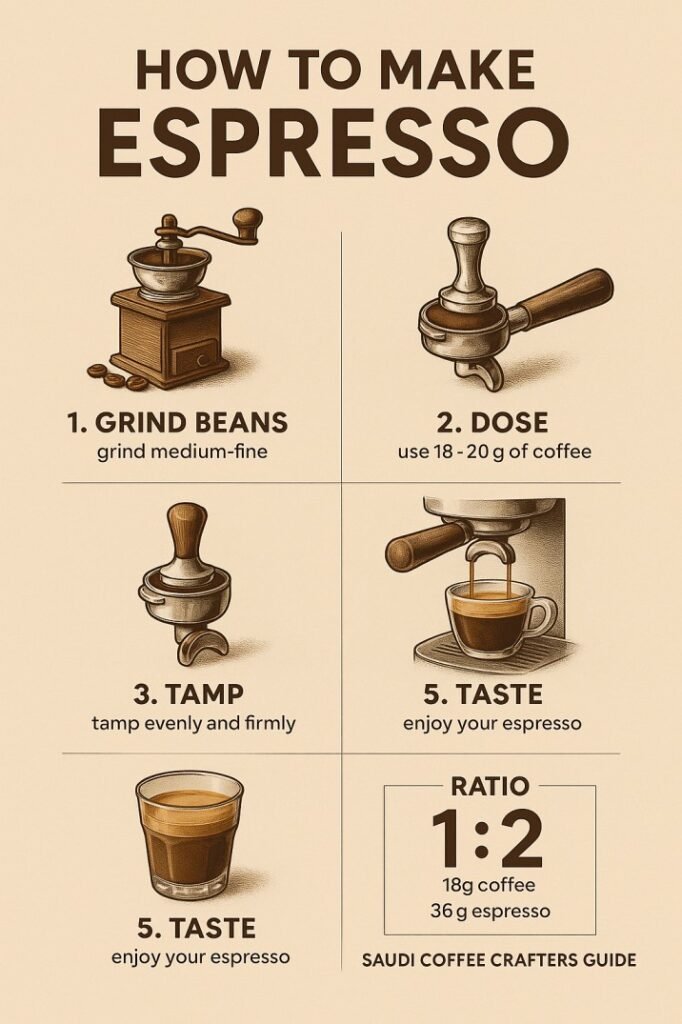
- Ideal Dose: 18–20 grams (Double Shot).
- The Risk: Under-dosing makes the shot weak and watery; over-dosing makes it bitter and muddy.
Step 3: Grind Fine and Even

The grinder is more important than the espresso machine. The coffee needs to be ground to the texture of fine sand.
Crucial Tip for Saudi Home Baristas: In humid cities like Jeddah or Dammam, coffee beans absorb moisture, which affects the flow. You may need to grind slightly coarser on very humid days compared to dry days in Riyadh.
Step 4: Tamp Firm and Level

Tamping compresses the air out of the coffee bed so water flows through it evenly.
- Apply firm, even pressure.
- Keep your wrist straight.
- Ensure the surface is perfectly flat.
Step 5: Set the Water Temperature
Temperature control distinguishes the pros from the amateurs.
- Target: 92°C – 94°C.
- Result: This range extracts the sweetness and oils without burning the coffee.
Step 6: Extract the Espresso (Timing Matters)

This is the moment of truth.
- The Ratio: Aim for 1:2 (18g coffee IN → 36g liquid OUT).
- The Time: The shot should finish in 25–30 seconds.
What Should a Perfect Espresso Taste Like?
Based on our café tastings, a great shot is:
- Slightly Sweet: Like caramel or dark chocolate.
- Viscous: It should coat your tongue (heavy body).
- Clean: No lingering harsh bitterness.
Popular Espresso Styles in Saudi Arabia
- Doppio (Double Espresso): The standard order in 90% of Saudi cafés.
- Ristretto: A “short shot” (less water). It is sweeter and more intense.
- Lungo: A “long shot” (more water). Lighter body, but higher bitterness.
- Yemeni Espresso: A rising trend using Khawlani beans—earthy, spicy, and premium-priced.
Common Mistakes We See in Cafés
- Under-Extraction: The shot runs too fast (<20 seconds). Tastes sour and salty.
- Over-Extraction: The shot runs too slow (>35 seconds). Tastes burnt and astringent.
- Dirty Equipment: If the portafilter isn’t cleaned, the coffee will taste metallic.
- Old Beans: If the beans were roasted more than 2 months ago, there will be no crema and a “flat” flavor.
Summary: Your Cheat Sheet Recipe
| Parameter | Target |
| Dose | 18g – 20g |
| Yield | 36g – 40g (Liquid) |
| Time | 25 – 30 Seconds |
| Temp | 92°C – 94°C |
| Grind | Fine (Sand texture) |
Frequently Asked Questions (FAQ)
1. What is the ideal espresso dose?
For a standard double basket, use 18–20 grams of dry coffee.
2. What is the best grind size for espresso?
You need a fine grind, similar to table salt or fine sand. If the water flows too fast, grind finer.
3. How long should an espresso shot take?
The sweet spot is 25 to 30 seconds.
4. Which roast is best for espresso in Saudi Arabia?
Medium or Medium-Dark Arabica beans are the safest bet for a balanced, chocolatey flavor profile.
5. Why is my espresso sour?
It is likely “under-extracted.” Try grinding your beans finer or increasing the water temperature.
6. Do Saudis drink espresso alone?
While milk-based drinks (Latte, Cappuccino) are more popular, the culture of drinking straight espresso is growing rapidly among enthusiasts.
7. What is the “Crema”?
Crema is the golden-brown foam on top of the shot. It is formed by CO2 bubbles emulsifying with coffee oils, and it indicates fresh beans.
☕ Explore More Saudi Coffee Crafters Guides
If you found this espresso guide helpful, explore our other specialty coffee tutorials designed for Saudi coffee lovers. For milk-based favorites, try our Latte guide or the richer, chocolate-forward Mocha. If you prefer bold, espresso-heavy drinks, check out our Macchiato method. For sweeter options, explore the ever-popular Spanish Latte. You can also learn refreshing brews like Cold Brew, master café classics like the Cappuccino and Americano, or enjoy dessert-style coffee with our Affogato guide.
- Latte → https://saudicoffeecrafters.com/how-to-make-a-latte/
- Mocha → https://saudicoffeecrafters.com/how-to-make-a-mocha/
- Macchiato → https://saudicoffeecrafters.com/how-to-make-a-macchiato/
- Spanish Latte → https://saudicoffeecrafters.com/how-to-make-a-spanish-latte/
- Cold Brew → https://saudicoffeecrafters.com/how-to-make-cold-brew/
- Cappuccino → https://saudicoffeecrafters.com/how-to-make-a-cappuccino/
- Americano → https://saudicoffeecrafters.com/how-to-make-an-americano/
- Affogato → https://saudicoffeecrafters.com/how-to-make-an-affogato/


2 Comments